

Quick answer
College football is the hardest jersey category to buy blind, because there are more than six hundred programmes and every one of them cuts its shirts differently. Buy your normal size for adult builds, but treat anything marked youth as one to two sizes smaller than the label suggests. Choose printed if you want to rep a school casually, and stitched if you are buying an alumni or legend name you plan to keep. The school matters more than the build.
Key takeaways
- College football is the hardest jersey category to buy blind: more than six hundred programmes, and each one cuts its shirts slightly differently.
- Adult unisex builds take your normal size. Anything labelled youth runs one to two sizes below the letter on the tag.
- Printed builds suit casual wear. Stitched builds suit an alumni or legend name you plan to keep.
- A current player shirt dates with the season. An alumni shirt means the same thing in ten years.
- The school decides the purchase, not the player. Buy the school when the shirt is a gift.
- Measure a jersey the recipient already owns before ordering, because the letter on the tag settles nothing.
Why college football is a different shopping problem
In the professional leagues there is a fixed roster of teams, so a jersey range is a closed set. College football is the opposite. The top division alone carries more than a hundred and thirty programmes, and beneath it sit several hundred more across the lower divisions. Each school has its own colour palette, its own lettering conventions and its own idea of how a shirt should be cut.
That scale is exactly why college gear is so rewarding to collect and so easy to get wrong. A buyer who knows their NFL size can order confidently. A buyer picking up a shirt for a school they did not attend is working with far less information, and the label on the tag tells them less than they expect.
The build levels you will actually see
Retail college jerseys tend to fall into four recognisable tiers. The names change between schools, but the construction underneath does not.
| Tier | How the marks are made | Weight | Best for |
|---|---|---|---|
| Replica | Printed crest and numbers | Light | Tailgates, warm weather, first jersey |
| Gameday build | Printed body with reinforced shoulder panels | Light to mid | Weekly wear through a season |
| Stitched | Separate twill crest, layered numbers | Mid to heavy | Collecting, gifting, long ownership |
| Alumni and legend | Stitched build around a historical name and number | Mid to heavy | Fans of a specific era |
Sizing: the youth trap, and how to avoid it
Pro-league sizing is a useful baseline before you size down for a child; it is covered in the NFL jersey buying guide.
This is where most college orders go wrong. A significant share of college inventory is listed as youth or unisex, and those labels do not mean what buyers assume they mean.
| Label on the tag | Fits chest (inches) | Comparable adult size | Watch out |
|---|---|---|---|
| Youth L | 30 - 32 | Adult S, snug | Runs two sizes below the letter |
| Youth XL | 32 - 34 | Adult S | Commonly bought by mistake for adults |
| Unisex S | 34 - 36 | Adult S | Straighter cut than a women's fit |
| Unisex M | 38 - 40 | Adult M | The safe default for most adults |
| Unisex L | 42 - 44 | Adult L | Roomy through the body |
| Unisex 2XL | 50 - 52 | Adult 2XL | Sleeves shorten relative to body |
The rule that saves you: measure a jersey you already own, flat, underarm to underarm, and double it. Then match that number to the chest column, ignoring the letter on the tag entirely. College ranges vary enough between schools that the letter is the least reliable field on the page.
What NIL and pick-a-player actually mean
NIL stands for name, image and likeness. It is the framework that lets college athletes earn from their own brand while still playing, and it changed what appears on a retail jersey rack.
Before NIL, a college jersey almost always carried a number with no name, or the name of a player who had already graduated. Now you can buy a current player's shirt while they are still on campus. That is genuinely new, and it is why listings increasingly offer a pick-a-player option where you choose the athlete and the number from a current roster.
Practically, this splits the category in two. A current player shirt is a statement about the season in front of you and may date quickly if the player transfers. An alumni shirt is a fixed historical artefact that will still mean the same thing in ten years. Neither is better, but knowing which one you are buying prevents disappointment.
Alumni and legend jerseys: buying a name that mattered
The alumni tier is where college gear separates from every professional league. A school with a hundred years of football has produced players whose names carry a specific decade, a specific offence and a specific national championship. Wearing that name is a different act from wearing a current star.
When you buy into this tier, check the number against the era. A legend shirt with a modern typeface on a historical number reads wrong to anyone who followed the programme, and those are exactly the people who will comment on it. Match the lettering style to the period the design references, not to the current season.
Choosing a school: three questions that settle it
Most buyers already know which school they want. If you are buying as a gift and you do not, these three questions narrow it faster than browsing.
| Question | Why it decides the purchase |
|---|---|
| Did they attend, or do they just watch? | An alumnus wants their own school. A viewer may follow a programme for a coach or a conference |
| Is there a family school? | Family allegiance outranks personal preference in almost every case |
| Do they want a name or a number? | This decides current player versus alumni, which is the biggest fork in the category |
Six programmes worth starting with
These are the schools whose shirts move fastest, and each one covers a different corner of the palette so you can see how the designs behave side by side.
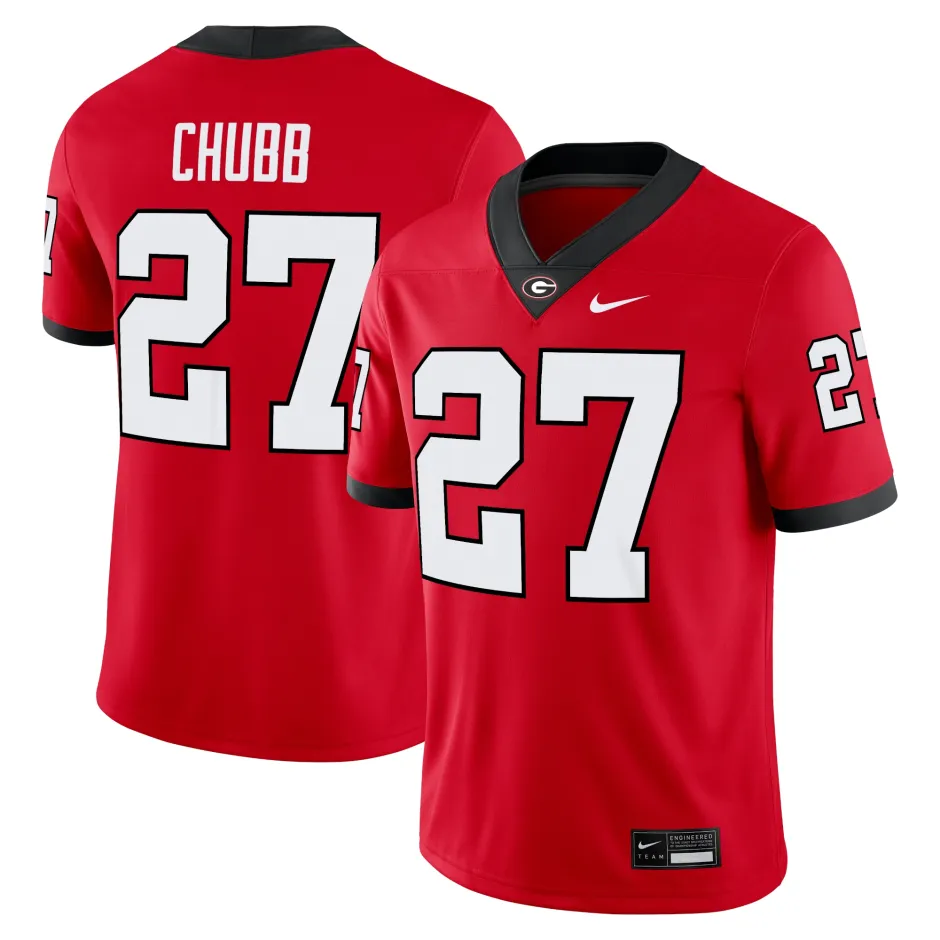
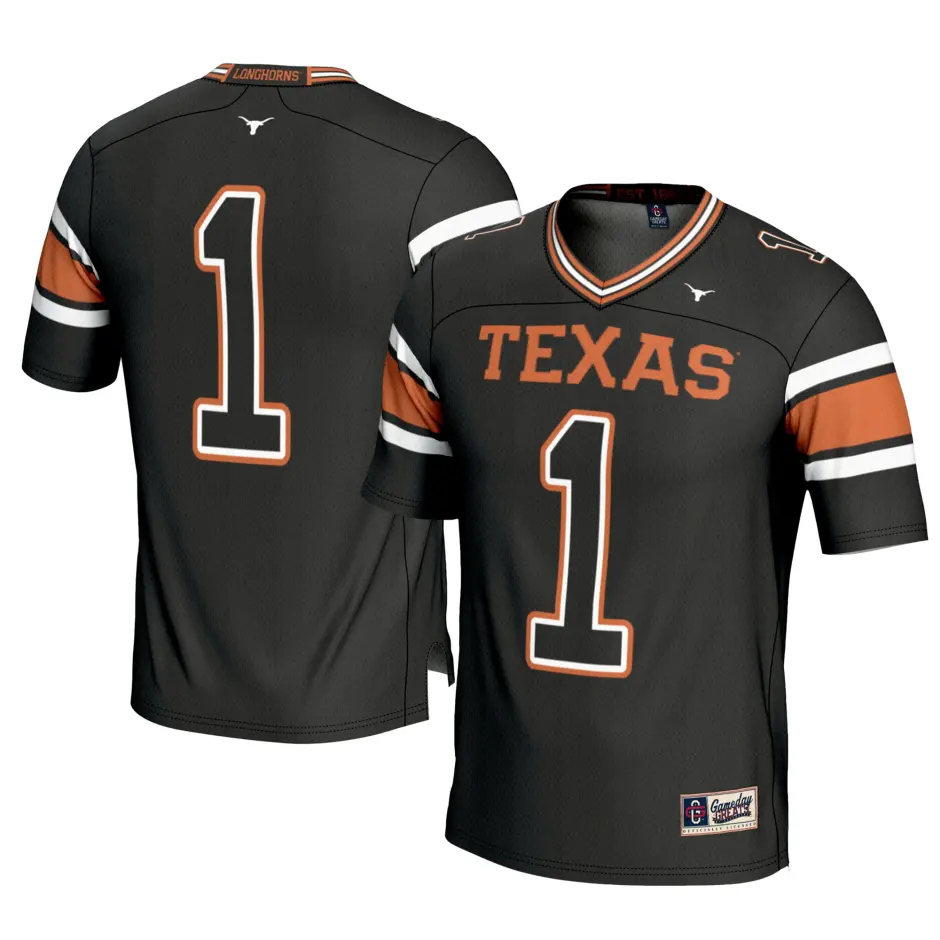
Georgia in red is the cleanest traditional read in the category. Texas and Tennessee both run deep alumni programmes, which makes them the strongest picks if you want a historical name. Notre Dame carries the most recognisable independent identity in the sport. Oregon is the one to choose if you want a modern design that changes often. Miami and USC round out the set for anyone who wants a louder, era-specific look.
You can browse every programme and colourway in our college football jersey collection, or go straight to a name in players jerseys. The campus apparel hub groups the current gameday builds with the alumni lines so the two tiers sit next to each other.
Caring for a college jersey
Wash inside out in cold water on a gentle cycle and hang to dry. The heat of a dryer is what kills printed graphics, and on a college shirt the print usually carries the school wordmark, so a dulled print is more obvious than a faded colour would be.
If you own a stitched build, never press an iron directly onto the crest. Work from the reverse with a cloth between the metal and the twill. Our cross-league fan version versus replica comparison covers the same construction questions if you are still deciding between tiers.
College football jersey sizing versus the pros: what actually changes
If you already know your size in a professional league, that knowledge transfers better than you might expect and less completely than you might hope. The adult cuts are close. The reliability of the label is not.
| What you are comparing | Professional league range | College range |
|---|---|---|
| Sizing system | One league-wide chart, applied across every club | A shared adult chart, but individual schools vary the cut enough to shift the fit |
| Label reliability | A letter means roughly the same thing club to club | The letter is the least reliable field on the page. Youth and unisex labels sit on the same listing |
| Colourway logic | Home, road and alternate follow a league-wide convention | Each programme sets its own palette and its own lettering conventions |
| Common mistake | Sizing up for layering when the cut already allows for it | Treating a youth XL as an adult large, or judging by the letter instead of the chest |
| Safest first buy | Home colourway in your measured size | A school shirt with no name, sized from a jersey the recipient already owns |
Practical upshot: if you know your measurement across the chest in a professional jersey, use that number and ignore the letter entirely. It is the one field that carries across every programme in the country.
College football jersey terms, decoded
College listings mix athletic terms with campus-specific ones. Knowing both tells you what a shirt actually is before you open the size chart.
| Term | What it means | Why it matters to you |
|---|---|---|
| NIL | Name, image and likeness, the framework letting athletes earn from their own brand | It is why a listing can now offer a current player's name and number while they are still on campus. |
| Pick-a-player | A listing where you choose the athlete and number from a current roster | The name is fixed to the athletes offered rather than being freely customisable. |
| Gameday build | A printed body with reinforced shoulder panels | The middle tier. Lighter than stitched, tougher than a plain replica, and the usual choice for weekly wear. |
| Alumni | A shirt built around a player who has already finished their college career | A fixed historical artefact. The design will still mean the same thing in ten years. |
| Team-issued | Language used for the cut and trim of the on-field shirt | Describes the pattern rather than the build. A team-issued cut can still be printed or stitched. |
| Wordmark | The written school name used as a mark, with or without the emblem | On a printed build the wordmark is the first detail to dull, which is why care instructions matter more here than in other leagues. |
| Youth scale | A pattern scaled down across every measurement, not just shortened | A youth XL is closer to an adult small than an adult large. This is the single most expensive misread in the category. |
Frequently asked questions
Do college football jerseys run small?
Adult unisex builds run true to a roomy stadium cut, so take your normal size. Youth-labelled builds run one to two sizes below the letter on the tag, which is where most ordering mistakes happen. Measure a jersey you already own and compare the flat chest instead of trusting the letter.
What does NIL mean on a jersey listing?
NIL stands for name, image and likeness. On a listing it usually means the shirt can be ordered with a current player's name and number, because college athletes can now earn from their own brand while still playing. Before this, college jerseys mostly carried numbers without names.
Should I buy a current player or an alumni jersey?
Buy a current player if you are celebrating the season in front of you. Buy an alumni shirt if you want something that still means the same thing in ten years. Current player shirts can date quickly if the athlete transfers; alumni designs do not move.
Is stitched worth it for a college jersey?
For an alumni or legend name you intend to keep, yes. For a shirt you will wear to a handful of games, a gameday build is the better value and will hold up perfectly well.
Which college jersey should I buy as a gift?
Buy the school, not the player, unless you know exactly who the recipient follows. A school shirt with no name is the safest gift in the category, because it cannot date and it cannot clash with an allegiance you did not know about. Confirm the size from a jersey they already own.
Are college football jersey sizes the same as NFL jersey sizes?
The adult cuts are close, but college ranges vary far more between schools, so the same letter can sit differently from one programme to the next. Use your flat chest measurement rather than the letter if you already know your professional size.
Can I put a name on a college jersey that is not on the roster?
On a customised build you choose the name and number you want, so a family name or a number with personal meaning is entirely possible. On a roster-led pick-a-player listing the name is fixed to the athletes offered.
Do college football jerseys come in women's fits?
Some ranges offer a women's build, which is tapered at the waist and shorter in the body, generally running about one size below the equivalent unisex letter. Where a range is unisex only, most buyers step down one size for a closer fit.
The short version
Pick the school first. Choose current player only if the season matters to you more than the history. Treat youth labels as one to two sizes smaller than they look. Buy stitched for a name you plan to keep and printed for everything else. And measure a jersey you already own before you order, because college programmes cut their shirts differently enough that the letter on the tag settles nothing.