
Quick answer
National team shirts are rebuilt on a two-year cycle, so buy the current cycle if you want to wear it, and an older cycle if you want to collect it. Take your normal size in the stadium fit. Only step down if you are choosing a slim player cut. A printed name is the one upgrade worth paying for, and it should be decided before you pick a size, not after.
Key takeaways
- National team shirts reset roughly every two years, so work out which cycle you are buying before anything else.
- Take your normal size in the stadium fit. Expect about three inches less chest at the same letter in a slim player cut.
- Decide the cut, then the size, then the name. A printed shirt cannot be exchanged.
- Long sleeve national shirts are far more common than long sleeve club shirts and use the same body block, so your size does not change.
- Designs that barely change between cycles hold their meaning longest. A radical one-cycle design is tied to a single tournament.
- Buying for someone else? Order blank in the safest size, confirm the fit on arrival, and print on the next one.
Why national team kits are different from club kits
A club shirt is tied to a team that never stops existing. A national team shirt is tied to a tournament cycle, and that cycle resets every two years. A confederation championship arrives, then a world tournament, then it starts again with a new design language, new fabric and often a completely different crest treatment.
That reset is the defining fact of this category. It means a national shirt has a shelf life that a club shirt does not, and it means the same nation can have three or four visually distinct shirts in the space of six years. Buying well here is mostly about knowing which cycle you are buying into.
Stadium fit and player cut: the two builds
The two-build split is the same one the European national teams use; the current cycle is covered in the 2026/27 Nations League League A kit rankings.
Every national team range is offered in at least two cuts, and the naming varies by nation. The construction difference underneath is consistent.
| What you are comparing | Stadium fit | Slim player cut |
|---|---|---|
| Body cut | Straight, roomy, sits away from the body | Tapered through the waist, close to the torso |
| Fabric | Softer hand feel, made for everyday wear | Lighter performance knit with ventilation panels |
| Crest | Applied emblem, durable through washing | Thinner applied emblem, lighter overall weight |
| Sizing advice | Take your normal size | Consider one size up if you prefer a relaxed look |
| Best for | Everyday wear, gifting, first purchase | Anyone who wants the on-pitch silhouette |
Sizing for national team kits
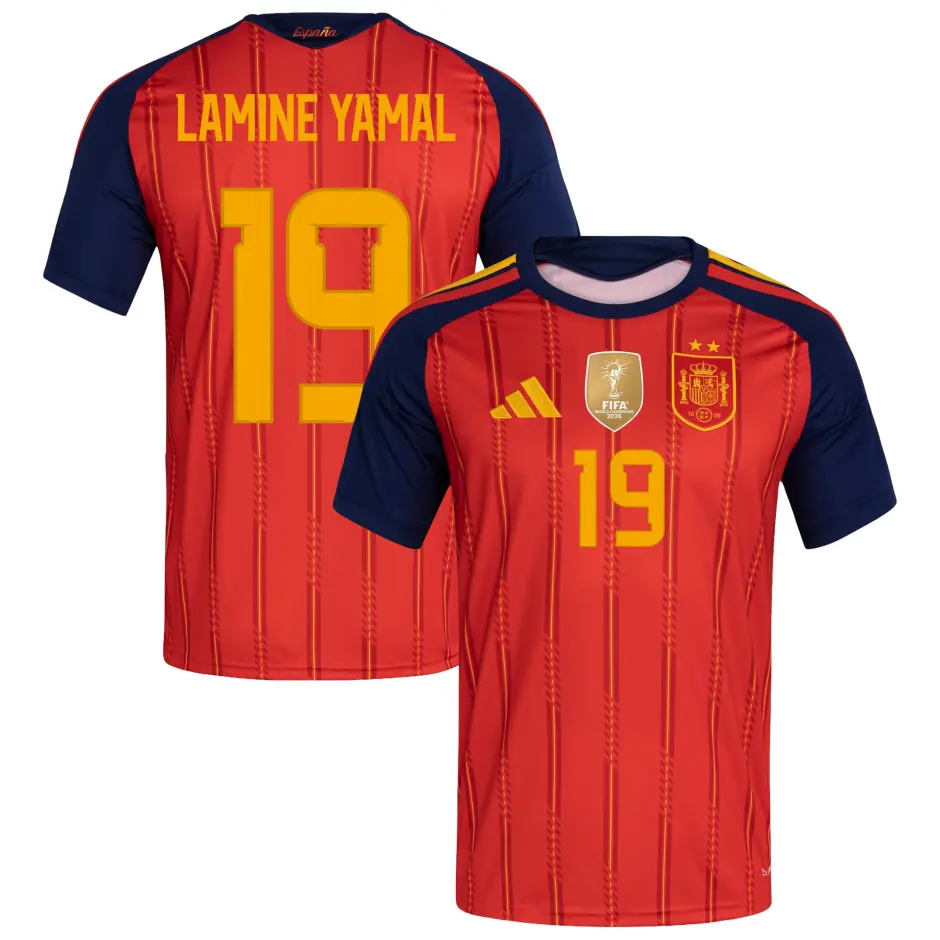
The most common surprise is that national team shirts run slightly narrower through the body than club shirts from the same range, because the national pattern is drafted from a different block.
| Size | Fits chest (inches) | Stadium garment chest | Slim cut garment chest |
|---|---|---|---|
| S | 34 - 36 | 39 in | 37 in |
| M | 38 - 40 | 43 in | 41 in |
| L | 42 - 44 | 47 in | 44 in |
| XL | 46 - 48 | 51 in | 48 in |
| 2XL | 50 - 52 | 55 in | 52 in |
Notice that the two garment columns differ by about three inches at every size. If you try someone else's slim cut shirt and assume the range runs small, you will oversize your stadium fit shirt by a full step. Decide the cut first, then the size.
Long sleeve or short sleeve
National team ranges carry long sleeve versions far more often than club ranges do, and the two are not interchangeable purchases.
| Sleeve | What it changes | Choose it if |
|---|---|---|
| Short sleeve | The standard silhouette, works over a tee in warm weather | You want one shirt that covers most of the year |
| Long sleeve | More fabric through the arm, a tighter cuff, a dressier line | You are buying for winter, or you want the classic tournament look |
Long sleeve shirts are usually cut on the same body block, so your size does not change. What does change is how much the sleeve adds to the overall look, which is why collectors often own the same nation in both.
Printing a name: decide this before you choose a size
A printed national shirt is the most personal thing you can buy in this category, and it is also the least returnable. That forces the ordering sequence.
Lock the size first using a shirt you already own, measured flat and doubled. Then decide the cut, because a printed slim cut at the wrong size is a total loss. Only then pick the name and number. If you are ordering for someone else and you are not certain of their size, a blank shirt is the safer purchase and looks identical from across a room.
Ten nations worth starting with
The shirts below are the ones that move fastest across the current international cycle, and between them they cover the full range of design directions.
Spain in deep red remains the cleanest single-colour shirt in the sport. Argentina carries the light blue stripes that have barely changed in decades, which makes it the safest long-hold purchase. France in navy and Brazil in yellow are the two most instantly readable shirts on a pitch. England in white and Germany in white with black trim are the traditional European picks. Portugal in deep red, Japan in blue, Mexico in green and the United States in white round out a set that covers every major market we ship to.
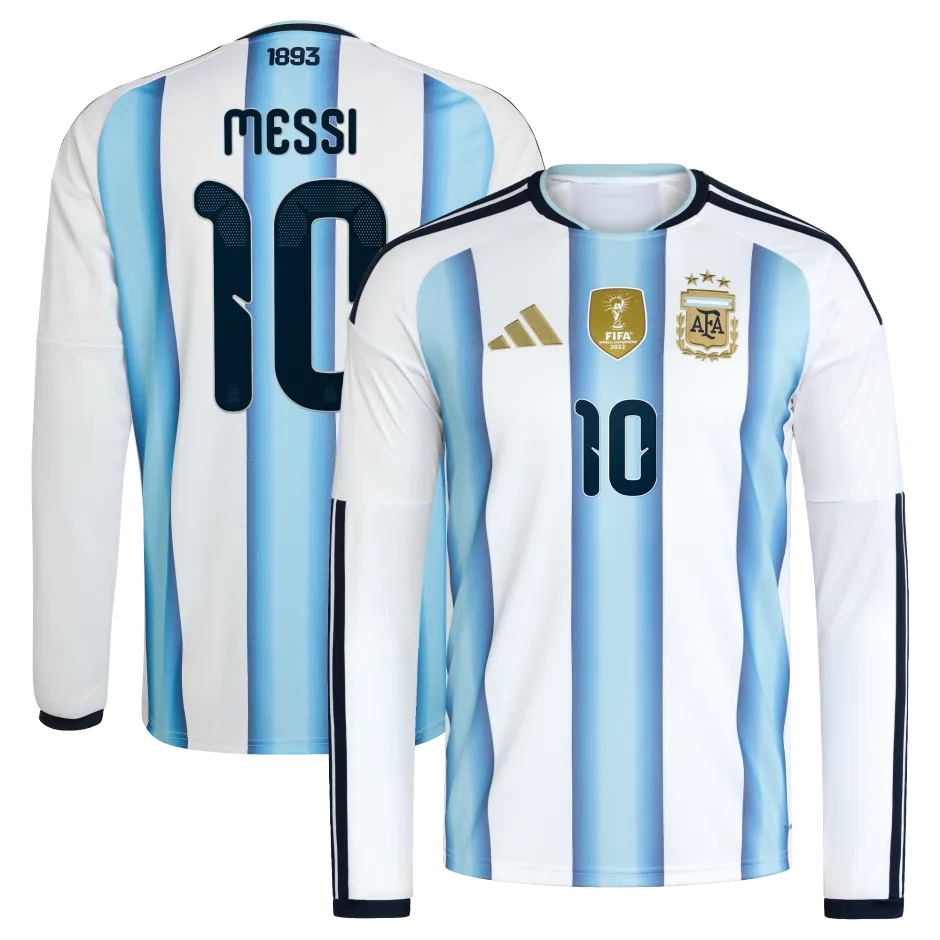
You can browse every nation and colourway in our world tournament jersey collection. If you want the design story behind each shirt rather than the buying advice, our nation-by-nation kit ranking covers the same shirts from a design angle.
Club kits versus national team kits
The choice between the two is not about quality. It is about how long you want the shirt to mean what it means now.
A club shirt represents a badge that persists. A national shirt represents a tournament moment, and that moment is dated the day it ends. If you are buying one shirt and you want it to still feel current in three years, a club shirt is the lower-risk purchase. If you are buying for a specific summer, and you want the shirt that belongs to that summer, the national shirt is the only thing that does the job. Our national team kit hub groups the current cycle together with the earlier designs so you can compare the two approaches side by side.
Four things to check before you order
If you are buying for a specific fixture rather than a group, the narrower guide is which shirt to buy for the Netherlands versus Germany opener.
Run through these in order and a national shirt stops being a guess.
One: the cycle date. Look for the tournament the design belongs to. If it is the current cycle you are buying something to wear now, and the colour should be the one you saw most recently on television. If it is two or three cycles back you are buying something historical, and both the intent and the price should change accordingly.
Two: the cut name. Stadium fit and slim player cut differ by roughly three inches of chest at the same letter. Knowing which of the two you are looking at prevents the most common sizing error in this category, because a shirt that felt tight on a friend may simply have been the slim version.
Three: sleeve length. Long sleeve national shirts are far more common than long sleeve club shirts, and the range uses the same body block either way. The decision costs you nothing in size, but it changes the silhouette considerably, and it changes how much of the year you can comfortably wear the shirt.
Four: whether you are printing a name. A printed shirt cannot be exchanged. If there is any doubt about the size, order blank, confirm the fit on arrival, and print on the next one. This single rule removes most of the risk from buying national team shirts for other people.
Caring for a national team shirt
Wash inside out, cold water, gentle cycle, hang to dry. National shirts often carry a lighter crest application than club shirts, so heat damage is more visible on them. Keep the iron away from the crest entirely.
If you own both a stadium fit and a slim cut, store the slim version flat if you can. Performance knits hold creases more readily than the softer stadium fabric, and a folded shoulder line is hard to press out without touching the emblem.
Where to start
Decide the cut, then the size, then the name. In that order, nothing goes wrong. Our size guide lists both the stadium and slim garment measurements so you can match a shirt you already own rather than guessing from a letter. If you are still weighing construction tiers across leagues, the fan version versus replica comparison covers that question directly.
How do you wash a printed national team shirt without ruining the name?
A printed national shirt is the least replaceable item in this category, because the name is personal and the shirt cannot be rehomed. Four habits keep the lettering intact.
- Turn it inside out before it goes near the machine. This keeps the printed name away from the drum and from anything with a zip, which is what actually scratches lettering.
- Cold water, gentle cycle, short spin. Heat is the mechanism that lifts a print, so the wash temperature matters more than the detergent you use.
- Never a dryer. This is the single habit that ends the life of a printed shirt. Hang it to dry in shade, on a wide hanger so the shoulders keep their line.
- Iron the reverse only. If the fabric needs pressing, work from the inside with a cloth between the metal and the print. Never press across the lettering itself.
Slim performance knits hold a crease more readily than the softer stadium fabric, so the reverse-iron rule matters most on a slim player cut.
National team shirt terms, decoded
Kit listings reuse a small set of terms across every nation. These are the ones that change what arrives in the box.
| Term | What it means | Why it matters to you |
|---|---|---|
| Stadium fit | The roomier cut sold to supporters, drafted for everyday wear | Take your normal size. It is the version most buyers should start with. |
| Player cut | The tapered, close-fitting cut worn on the pitch | About three inches less chest than the stadium fit at the same letter. Decide this before you decide your size. |
| Cycle | The two-year design window a national shirt belongs to | It tells you whether you are buying something to wear now or something historical. Ask this question first. |
| Bringback | A reissue of a shirt design from an earlier era | Lettering and trim reference the period, not the present season. The intent is collecting rather than wearing. |
| Pre-match top | A training or warm-up garment rather than a match shirt | Different silhouette and often different sizing rules. It is not a substitute for the match shirt. |
| Applied emblem | The crest bonded or sewn to the chest panel | National shirts often use a lighter application than club shirts, which makes heat damage more visible on them. |
| Printed name | A personalised name and number bonded to the back | The one upgrade that makes a shirt personal, and the one that removes any chance of an exchange. |
Frequently asked questions
How often do national team kits change?
Roughly every two years, alternating between continental and world tournaments. That means the same nation can show three or four distinct designs within six years, so an older shirt reads as a specific era rather than as an outdated version of the current one.
Do national team shirts fit smaller than club shirts?
Slightly narrower through the body, because the national pattern is drafted on a different block. In the stadium fit the difference is small enough that your normal size usually works. In a slim player cut expect around three inches less chest at the same letter.
Should I size up for a slim player cut?
Only if you prefer a relaxed look rather than the fitted on-pitch silhouette. Many buyers stay at their normal letter and accept the closer fit, since sizing up defeats the point of choosing a slim cut in the first place.
Is a printed name worth it on a national shirt?
It is the one upgrade that changes the shirt from a kit replica into something personal. Just settle the cut and the size first, because a printed shirt cannot be exchanged and a wrong size becomes a total loss.
Which national shirt holds its value longest?
The ones whose design barely changes between cycles. A striped shirt that has looked broadly the same for decades stays readable whatever year it was made, whereas a radical one-cycle design is tied to a single tournament window.
How do you wash a football shirt with a printed name?
Turn it inside out, wash cold on a gentle cycle, and never put it in a dryer. Heat is what lifts a printed name, so hang it to dry in shade and iron only the reverse side, never across the lettering.
Can you remove a printed name from a football shirt?
Not cleanly. A printed name is bonded into the fabric, and any attempt to lift it leaves a visible ghost of the lettering behind. Treat a printed shirt as a permanent choice rather than a reversible one.
Which is the better gift, a club shirt or a national team shirt?
A club shirt is the lower-risk gift because the badge does not date. A national shirt is the stronger gift for a specific tournament summer, provided you know the recipient follows that nation and you are confident about the size.
The short version
Know which cycle you are buying. Take your normal size in a stadium fit, and step up only for a slim cut if you want a relaxed look. Decide the sleeve length before the name. And if you are ordering for someone else, buy the blank shirt and the safest size, because printed national shirts do not come back.