
Quick answer
For most fans the right first buy is a replica in your normal t-shirt size. Baseball jerseys are cut loose and worn over a tee, so sizing up is the single most common mistake. If you want layered twill on the crest and a longer lifespan, the stitched build is worth the step up. If you are between two sizes, go down, not up. The rest of this guide covers construction, the size chart, colourway naming and care.
Key takeaways
- Baseball jerseys are drafted with roughly four inches of layering room, so your normal t-shirt size is almost always the right one.
- Replica builds print or heat-apply the crest. Stitched builds sew on a separate twill crest over layered numbers.
- Between two sizes, go down. Sizing up is the most common reason a baseball jersey photographs like a nightshirt.
- Home is the safest first colourway. Road grey reads best under stadium lights, and City Connect dates fastest of all.
- Measure a jersey you already own across the chest, flat, and double it — do this before you order anything customised.
- Settle the size before the name. A customised shirt cannot be rehomed, so the usual safety net disappears.
Why baseball jerseys fit differently from every other league
Walk into any store that sells jerseys across multiple sports and baseball is the odd one out. Football, basketball and hockey jerseys are built to be the outer layer over a shirt or hoodie. A baseball jersey is a button-front garment with a placket, and it was designed to be worn untucked over a base layer, or tucked with a belt showing at the waist.
That single design decision explains almost every sizing complaint you will read. The shoulder seam sits lower than on a t-shirt. The chest and waist are cut with room to move. The sleeves are short and wide enough to clear an undershirt. A jersey that looks oversized on a hanger is usually doing exactly what it was built to do.
The practical consequence: order the size you actually wear in a t-shirt, and only size up if you intend to layer a hoodie underneath. If you have never owned a baseball jersey before, this is the one piece of advice that prevents most returns.
Replica and stitched: what you actually get
Both builds are made for fans, and both will look correct across a room. The difference is how the crest, numbers and lettering are applied, and that difference shows up in weight, drape and how the jersey ages.
| What you are comparing | Replica | Stitched |
|---|---|---|
| Crest and team marks | Printed or heat-applied | Separate twill piece sewn on |
| Numbers and nameplate | Single printed layer | Layered twill with visible relief |
| Fabric weight | Light, breathable, easy to pack | Heavier hand feel, holds its drape |
| Placket and buttons | Functional placket, lighter trim | Full placket, reinforced trim |
| How it wears over years | Colours hold, print can dull with heat | Ages slowly, stays dimensional |
| Best for | Everyday wear, warm weather, gifting | Collecting, gameday, repeated wear |
If you expect to wear it weekly through a full season, or you want the crest to look dimensional in photographs, the stitched build is the better long-run value. If you want something you can throw in a bag for a summer road trip, replica is genuinely the smarter buy and not a compromise.
The MLB size chart, and why it runs loose
Baseball sizing is quoted two ways. Retail listings use letter sizes, while the labels inside the garment often carry a numeric chest measurement. Both describe the same body, so the chart below pairs them.
| Letter size | Fits chest (inches) | Garment chest | Typical body height |
|---|---|---|---|
| S (40) | 34 - 36 | 40 in | 5 ft 5 - 5 ft 8 |
| M (44) | 38 - 40 | 44 in | 5 ft 8 - 5 ft 10 |
| L (48) | 42 - 44 | 48 in | 5 ft 10 - 6 ft 1 |
| XL (52) | 46 - 48 | 52 in | 6 ft 0 - 6 ft 3 |
| 2XL (56) | 50 - 52 | 56 in | 6 ft 2 - 6 ft 5 |
| 3XL (60) | 54 - 56 | 60 in | 6 ft 4 - 6 ft 7 |
Notice the gap between body chest and garment chest. That four-inch difference is the layering allowance, and it is why a jersey feels roomier than the number suggests. It is also why a jersey measured flat will look two sizes too big next to a t-shirt of the same letter.
Measure yourself in two minutes
Take a jersey you already like the fit of, lay it flat, and measure straight across the chest from one underarm seam to the other. Double that number. Match it to the garment chest column above and you are done. Do not measure your own body and compare it to the garment chest column, because that ignores the layering allowance and pushes you a full size up.
Reading the colourways: home, road, alternate and City Connect
Baseball naming for colourways is more precise than in other sports, and knowing it tells you exactly what you are getting from a photograph.
| Name | What it means | Wear it when |
|---|---|---|
| Home | The lighter base colour a club wears at its own park | Any occasion, the safest first jersey |
| Road | The darker travelling colourway | Evening wear, photographs well |
| Alternate | A third club colour used on selected dates | Standing out from the crowd |
| City Connect | A city-themed design series with its own graphics | Collecting, limited-run interest |
| Throwback | A reproduced historical design | Anyone who wants a story with the shirt |
If you are buying your first jersey for a specific club, home is almost always the right answer. It is the colourway you will see most often on television, and it is the one that stays readable in a crowd.
Six jerseys worth starting with
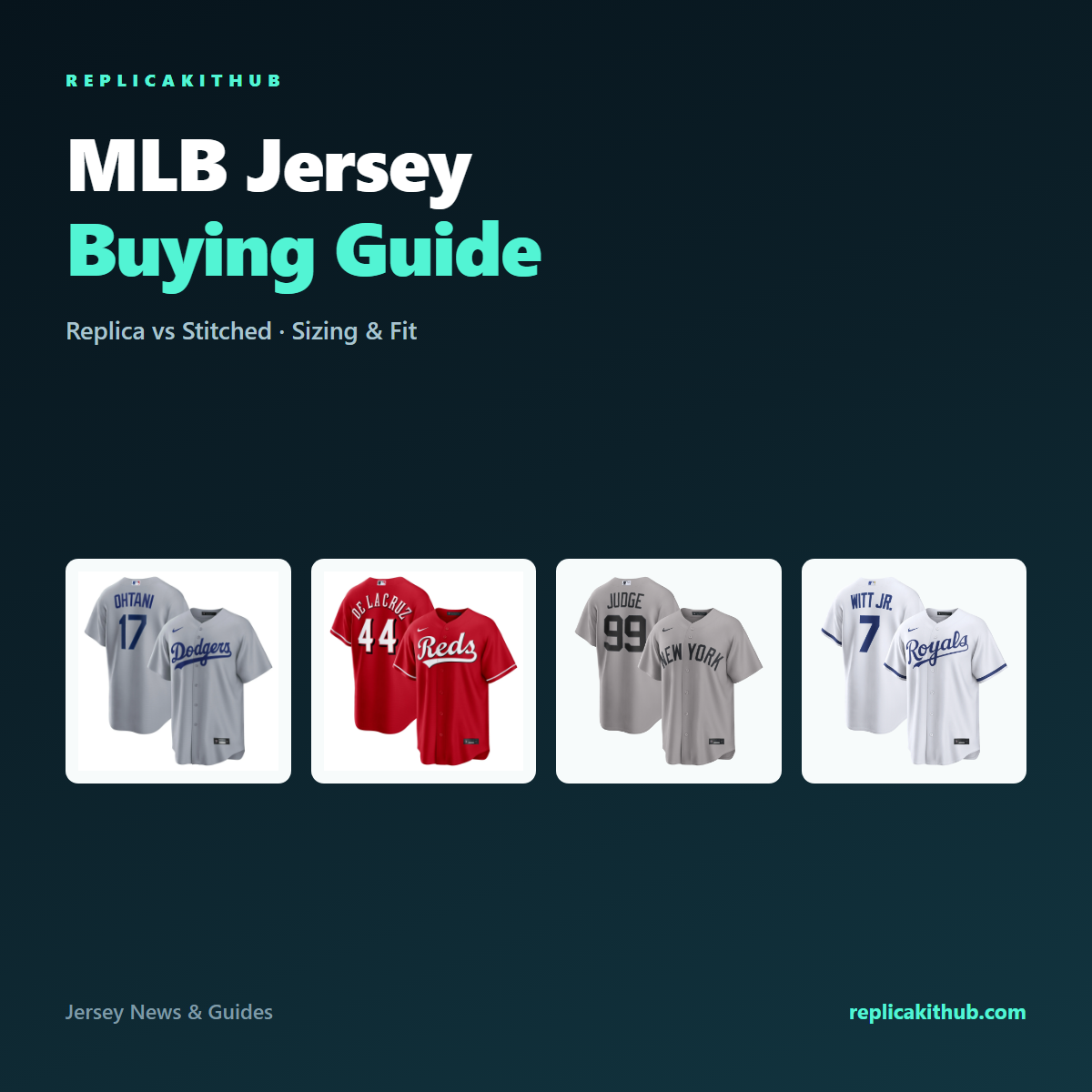
The names below are the players whose shirts move fastest across all thirty clubs, and they cover both a home and a road palette so you can see how the colourways behave.
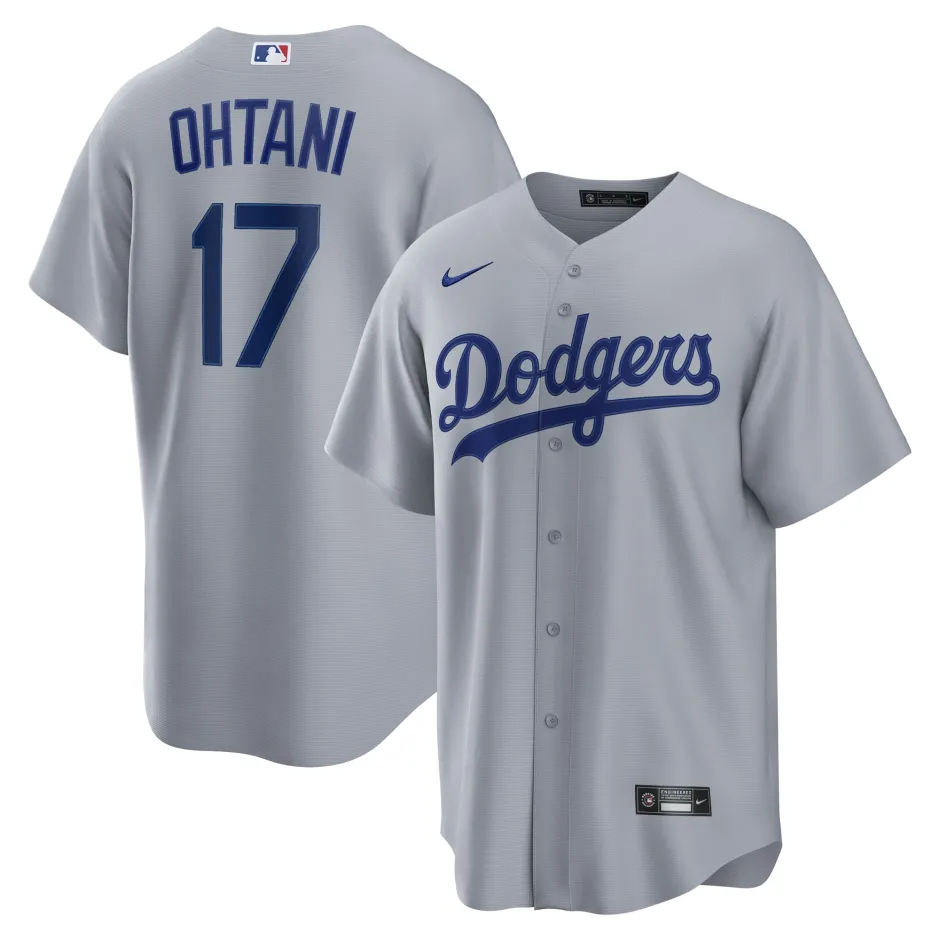
Shohei Ohtani is the single most requested shirt in the sport right now, and the road grey version is the cleanest read of it. Aaron Judge carries the pinstripe tradition and looks sharpest in the road cut. Bryce Harper covers the louder end of the palette. Elly De La Cruz and Paul Skenes are the two names younger fans ask for most, and both look strong in an alternate colour. Bobby Witt Jr. is the pick if you want a home white that will still look current in five years.
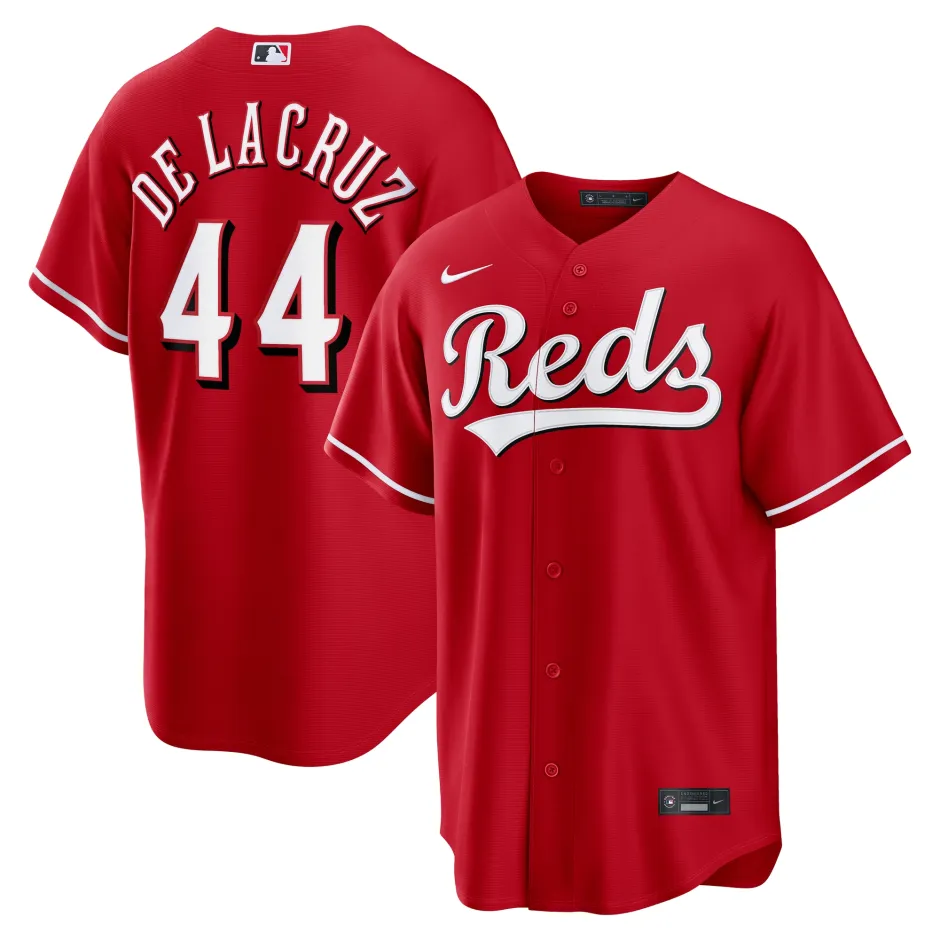
All six are stocked in both builds. You can browse the full range by club in our MLB jersey collection, or start from the player-led view in players jerseys if you already know the name you want.
Custom names and numbers: check these two things first
If you want a name and number put on, the full personalization walkthrough is in the custom jersey guide.
Personalised baseball jerseys are the most returned item in the category, and the reason is almost never the printing. It is the combination of a custom order and a size guess.
First, lock your size before you add a name. A customised jersey cannot be rehomed, so the usual safety net of an exchange disappears. Second, match the lettering style to the club rather than to your own preference. Clubs differ in how they set the nameplate, and a custom shirt that uses the wrong letterform reads as a knock-off even when the garment itself is fine. Our MLB apparel hub groups the current custom options with their reference designs so you can compare before ordering.
Caring for a baseball jersey
Turn the jersey inside out before washing. Cold water, gentle cycle, and never a hot dryer cycle. The heat that destroys printed graphics is the same heat that dulls stitched twill over a couple of seasons. Hang it to dry in shade.
For a stitched build, avoid ironing directly on the crest. If the fabric around it needs pressing, iron from the reverse side with a cloth between the metal and the twill. Store it on a wide hanger rather than folded in a drawer if you care about the shoulder line. If you want the fuller breakdown across garment types, our fan version versus replica comparison covers the same construction question from a cross-league angle.
Where to shop, and what to compare
Two things decide whether you end up happy: the build, and the fit. The build is a one-time decision you make once you know how often you will wear it. The fit is a measurement you can settle in two minutes with a jersey you already own.
Start with our size guide, measure the flat chest of something that fits, and then choose the colourway. It is a shorter path than browsing by photograph and guessing.
Youth, women's and big-and-tall: which baseball jersey size do you need?
Retail baseball ranges are listed under four different build names, and the letter on the tag means something different in each of them. Buying the right letter in the wrong build is the second most common sizing mistake after simply sizing up.
| Build | How it is cut | How to size it |
|---|---|---|
| Unisex adult | The straight stadium block, roomy through the chest and waist | Your normal t-shirt size. This is the default build and the one the main size chart covers. |
| Youth | Narrower shoulders, shorter body, scaled down across every measurement | Two sizes below the equivalent adult letter. A youth XL sits close to an adult small, not a large. |
| Women's | Tapered at the waist, shorter in the body and slightly narrower at the shoulder | About one size below the equivalent unisex letter. Stay with unisex if you prefer the straight cut. |
| Big and tall | Extra body length and a wider chest on the same shoulder width | Order your usual chest size here. The added length is the point, not extra width. |
Check the product title rather than the size selector. A listing that carries the word youth in its handle is built on the scaled pattern, even when the size dropdown shows a plain letter.
Baseball jersey terms, decoded
Listing titles carry a small vocabulary that tells you most of what you need before you open the size chart. These are the terms that change what you are actually buying.
| Term | What it means | Why it matters to you |
|---|---|---|
| Placket | The buttoned strip running down the front of the shirt | A full placket with working buttons is standard on baseball builds. It is the feature that separates a baseball jersey from a football or hockey shirt. |
| Nameplate | The fabric strip carrying the surname, sewn above the number | A stitched nameplate is a separate piece. A printed one is bonded to the back panel and is the first detail to lift if you use a hot dryer. |
| Twill | The layered fabric used for sewn crests and numbers | Twill is what creates the raised, dimensional look. Thicker twill reads as a higher build tier in photographs. |
| Heat-applied | A mark bonded to the fabric with heat rather than sewn | Light, flat and comfortable to wear. It is also the finish most sensitive to dryer heat. |
| Pinstripe | The thin vertical stripe on many home designs | Printed rather than woven, so it stays crisp but will not fade at the same rate as the base fabric. |
| Road grey | The neutral travelling colourway | Chosen so two clubs never clash at an away park. It also photographs better than any other colourway under floodlights. |
| Throwback | A design that reissues an earlier era of a club uniform | Lettering is matched to the period, not the current season. Check the era before you buy if accuracy matters to you. |
| City Connect | A design series built around a city rather than club colours | Each design runs for a limited window, which makes it the most collectable and the fastest-dating shirt in the range. |
Frequently asked questions
Do baseball jerseys run big?
Yes, deliberately. The cut includes roughly four inches of layering room beyond your body chest, because the garment is designed to be worn over a base layer. If you wear a medium t-shirt, order a medium jersey and expect it to feel roomier.
Should I size up for a baseball jersey?
Only if you plan to layer a hoodie underneath. For normal wear over a t-shirt, stay at your usual size. Sizing up is the most frequent cause of a jersey that looks like a nightshirt in photographs.
Is stitched worth the extra cost?
If you will wear it weekly and want the crest to hold its shape, yes. A stitched build uses a separate twill piece for the crest and layered numbers, so it keeps dimension after repeated washes. For occasional wear, a replica is the better value.
Can I wash a stitched jersey in a machine?
Yes, inside out on a cold gentle cycle, then hang to dry. Avoid the dryer entirely and never iron directly on the twill. Follow that and the crest will outlast the fabric.
What is the difference between home and road colourways?
Home is the lighter base a club wears at its own park; road is the darker travelling colourway. Both are current designs in the same range. Home is the safer first purchase because it is the version you see most often.
Do baseball jerseys shrink in the wash?
Printed builds can lose a little length on a hot cycle, and heat is the only thing that reliably distorts either build. Wash cold and inside out, skip the dryer, and hang to dry in shade and the jersey keeps its size.
Are women's baseball jerseys cut differently from unisex?
Yes. A women's build is tapered through the waist and shorter in the body, and it usually runs about one size below the equivalent unisex letter. If you prefer the straight stadium cut, stay with unisex.
What is a City Connect jersey?
City Connect is a design series built around a city rather than a club's traditional colours. Each design runs for a limited window, which makes it the fastest-dating shirt in the range and the one collectors look for first.
The short version
Buy the size you actually wear. Choose replica for casual wear and stitched if you want the crest to last. Pick home for a first jersey and alternate if you want to be spotted across a stadium. Measure a jersey you already own before you order anything customised, because custom orders cannot be exchanged.